Welcome back to Changemakers, the newsletter for founders, storytellers, and leaders shaping the future of climate, nature, and impact-led innovation.
This edition explores what happens when a pitch doesn’t quite land, and how one company reshaped their story to unlock a powerful raise.
Today’s topics..
→ Spotlight: The Moment the Room Went Quiet
→ Case Study: How We Rebuilt Kanop’s Pitch to Earn Belief
→ For Founders: The Six Shift Framework That Turn Decks into Growth Engines
→ Slide-by-Slide: The Emotional Architecture
→ Client Wins: Eeden & ERS
We’d love to hear your feedback on the content of these newsletters. If you have any thoughts or suggestions, send a message to mission@brighterfuture.studio.
Spotlight: The Moment the Room Went Quiet

The lights dimmed. The investor meeting began. The founder stepped up, confident. The deck was loaded with traction, technology, and market logic.
But midway through, something shifted.
A pen tapped the table. People flipped the slides back. Then someone asked:
"But what exactly do you do?"
Not a rejection. But not belief, either.
The room held that faint scent of stale coffee and old carpet, the kind that lingers in offices that have seen too many pitches and not enough conviction. The air felt thick with hesitation and unease.
That moment? It happens more often than you think. Founders don’t lose the room because the product is weak. They lose it because the story is unclear, unstructured, or too technical to feel real.
Sometimes the product is ready, but the pitch is not.
Case Study: Rebuilding Kanop’s Pitch to Earn Belief

Kanop came to us with a clear vision and real traction. They were building a platform to unlock investment into nature at scale. The team was sharp, the tech worked, and the customer landscape was mapped.
But the pitch wasn’t working.
It was dense. Technically impressive, but strategically flat. It moved like a document, not a story. Slides overflowed with information. There was no emotional pacing, no clear arc from purpose to business model to return.
The message was there, but it didn’t land.
They had given us the bricks: a strong product, real traction, a capable team. What they needed was the cement. We set the foundations, raised the structure, and shaped the interior so that every part worked in harmony. Not just for them, but for the investors walking through the door.
Romain Fau, CEO of Kanop, knew it needed more than slides. He needed someone who could connect strategy, narrative, and investor mindset in one flow. He wasn’t looking for a deck that described Kanop. He needed one that proved it.
And the clock was ticking. There was pressure to get this right.
In under two weeks, we reshaped everything. Not just the content, but the structure, the pacing, and the emotional flow. The new pitch opened with clarity, built with intent, and closed with conviction.
We also clarified the one thing that sets Kanop apart. A unique value proposition that reframes the entire category. While we cannot share the specifics yet, it became the centre of gravity for their pitch. Every slide pointed back to it. Every conversation could begin with it. It gave the pitch focus and force.
It was so well-constructed we could deliver it ourselves. Word for word, it would still land. They say you can feel when a pitch breathes. This one does.
We shared the final version in a call. Romain’s face said everything. That mix of relief, energy, and recognition, like the story he had been trying to tell had finally found its voice.
He smiled, leaned back, and said, “Yes. This is it.” Then we started pitching it ourselves, slide by slide, like we were already in the room with investors.
That’s what happens when a pitch clicks. You feel the shift. So does everyone else.
The result was one of the most effective investor decks we’ve ever delivered. Not because it was polished, but because it was clear, confident, and built on belief.
How We Built It - And What Founders Can Take From It If They’re Raising in 2025

The Brighter Future Philosophy
At Brighter Future, we don’t start with slides. We start with clarity.
Our pitch development process is built around a core belief: a great pitch does not just inform investors. It makes them believe.
We go beyond storytelling. We bring together brand, business strategy, and investor psychology to craft a narrative that:
Connects emotionally
Signals maturity and scale
Creates urgency without hype
Each deck is designed for layered comprehension. A 30-second skim shows credibility. A deep read shows a fundable company.
We focus on how the story unfolds:
The emotional hook
The market tipping point
The problem mechanics
The wedge and solution
The business engine
The team and timing
That was the architecture we built for Kanop.
What We Started With
Kanop came in strong. They had:
A clear technical vision
Real traction and a solid team
A defined customer landscape
But also:
Too much technical depth for early-stage investors
No sharp investor story or market frame
No clear arc from purpose to business model to exit
Our job was to turn it into a story that built belief - in the category, in the team, and in the scale of the opportunity.
What We Changed: The Six Shifts
We rebuilt the pitch around six core principles that can apply to any founder raising capital today.
1. Clarity Over Completeness
Founders often want to say everything. Investors want to believe one thing. We anchored the deck around a single idea: Kanop is building the trust layer for nature-based investing.
Rather than overload with detail, we clarified the value in one line. Everything flowing into nature is now measured, verified, and made investable through Kanop. That gave the story a spine.
2. Purpose With a Pathway
We opened with emotion, then anchored it in timing and traction. The "Why Now" section became one of the most powerful parts of the deck, linking regulatory pressure, capital flows, and Kanop’s readiness.
3. From Risk to ROI
We reframed the challenge. Nature investment is blocked by uncertainty. We showed how Kanop clears that friction, unlocking capital across the full lifecycle. This was not just a values story. It was a return story.
4. Narrative Layers
We built the deck to be read in two minutes or twenty:
Top line: one belief per slide
Mid line: investor-relevant insight
Base line: technical validation
This structure gave investors multiple entry points without losing coherence.
5. Financial Credibility
We mapped the raise to execution milestones, added realistic return scenarios, and clarified ARR targets. The result was a believable path to 3 to 7 times the returns over four to six years.
6. Design That Signals Maturity
Visual strategy is business strategy. A clean layout, clear hierarchy, and composed tone helped position Kanop as a platform with real leadership potential, not just a clever concept.
Final Outcome: A Deck That Converts
We took a technically solid pitch and rebuilt it into a category-defining story in under two weeks.
The new deck included:
A sharp, emotionally grounded opening
A structured journey from problem to solution
A clear go-to-market and expansion plan
A confident use-of-funds and return model
A team slide that signalled depth and readiness
It didn’t just inform. It created belief.
"Working with Brighter Future was incredible. The way they merged storytelling, design, and investor strategy helped us unlock a version of our pitch that simply didn’t exist before. We’re now doubling our raise target because we finally feel like our story translates our full potential."
— Romain Faus, CEO of Kanop
Slide-by-Slide: The Emotional Architecture
We designed Kanop’s deck with narrative pace. Here’s how the story moved:
Opening With Why - The emotional driver behind Kanop’s existence
Why Now - Regulation, timing, and capital flow
Problem and the Gap - The breakdown between capital and land-level data
Solution - A full platform play, not just features
Market and GTM - Real traction, plus segment roadmap
Raise and Return - Strategic use of funds, credible return pathway
We seeded the 'Why Invest' early and closed with numbers. No filler. Just momentum.
What Founders Can Learn
Belief starts with the founder. When you believe your story fully, you stop pitching with hesitation and start pitching with conviction. And when that happens, the raise becomes inevitable.
Don’t start with slides. Start with the story.
Know your one-line pitch. What are you the platform for?
The vision alone doesn’t sell. The timing does.
Make the raise feel strategic, not reactive.
Show the machine, not just the mission.
Design is the strategy. The visual clarity builds investor confidence.
Smart Investment for Serious Results
For founders wondering whether working with us on a success-fee basis is worth it; this is your answer. It's not cheap, but we're taking the risk because we are confident in the outcome.
If you'd prefer we can support you with pitch design on a standalone basis. This is ideal for teams who don’t need deep strategic thinking or story work, but still want design that delivers. But it’s the combination of both - story and design - that becomes your biggest power.
A pitch is not just a deck. It is your growth engine. And clarity is what makes it run.
If you're raising in climate, nature, or SaaS-for-impact, and your pitch is not yet making people believe then let’s talk.
We don’t just make decks.
We help you close the round.
Client Win: Eeden’s €18M Raise
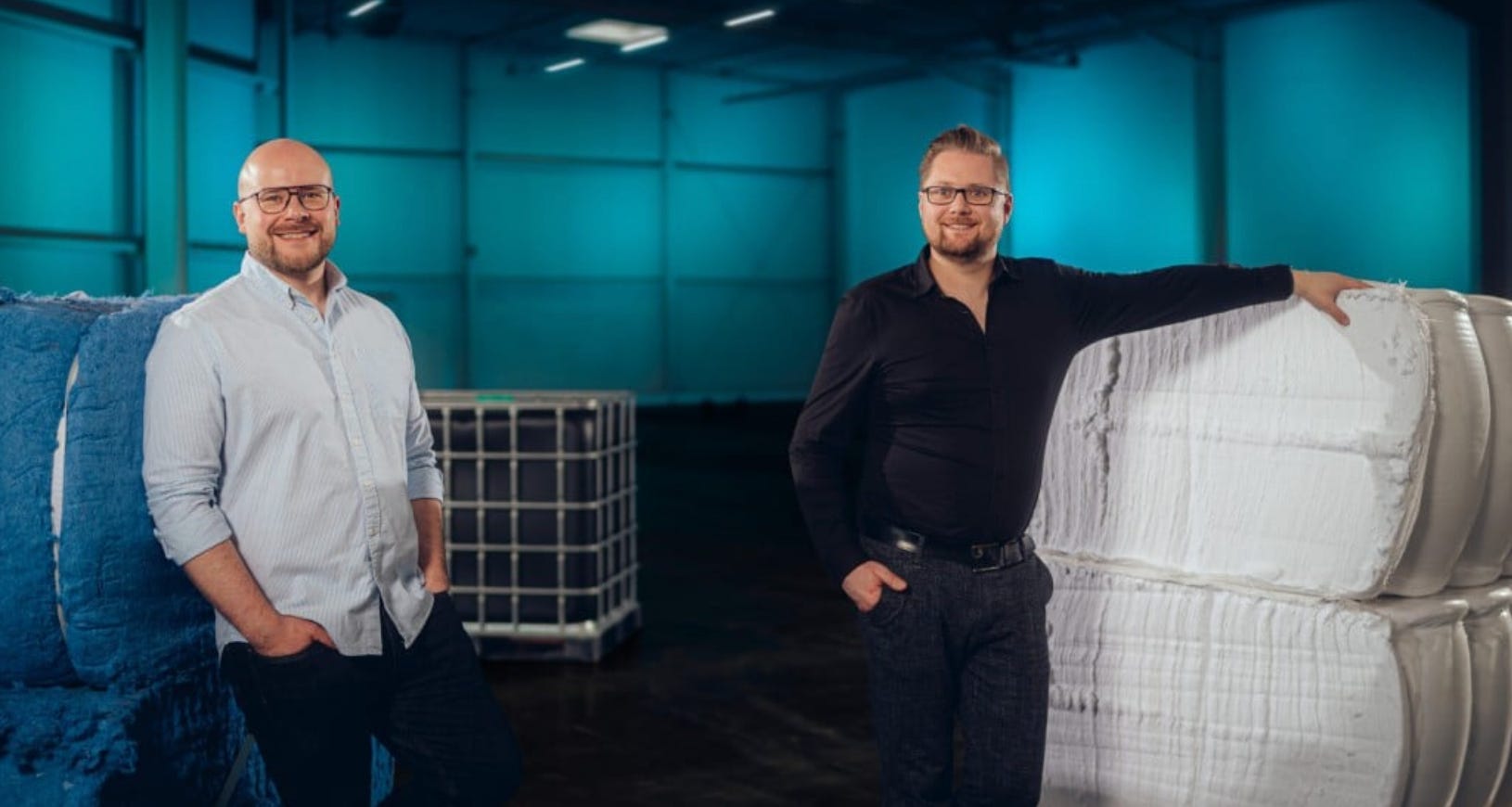
Huge congratulations to the team at Eeden, who just closed their €18 million Series A to scale chemical recycling in the textile industry. We supported them early last year on Storytelling & Partnership Development - helping shape a clean, clear narrative for circular materials innovation.
We’ll be diving deeper into that project in a future newsletter.
Client Win: ERS Brand Evolution
Congratulations to ERS, the team behind the Ecosystem Restoration Standard. We led their full brand transformation from Wildsense to ERS, developing a visual identity and brand clarity that reflected the maturity of the organisation.
ERS recently closed €5 million in new funding, led by AENU and noa, to scale their certification system and expand their suite of methodologies.
As restoration emerges as a recognised asset class, it’s clear brand thinking - that helps makes it legible, trusted, and ultimately investable.
Explore Our Services
Whether you’re just starting or striving for new heights, these services are built to deliver results.
Communications Consulting: High-trust, high-impact strategic communications to sharpen your voice and align your message across channels.
Investor & Partnership: Success Fee Only Pitch-ready support that helps you earn belief from day one.
Brand and Identity Design: Strategic and visual foundations to help you show up with confidence and coherence across every touchpoint; from logos to brand systems, we build the assets and structure to scale.
High-Level Design Support: Need reports, investor updates, or partner materials? We offer tailored design execution across your business-critical communications.
Website Design: Tailored Webflow builds that communicate your credibility and value.
Know Someone Who Needs Support?
Refer a founder to Brighter Future Studio and earn a 10% commission on their first project. Let’s help more purpose-led teams win with story. If this story resonated, or if you’re preparing for a high-stakes moment of your own; we’d love to help.
Thanks for reading.
If you’ve made it this far, feel free to share this with a founder, partner, or investor navigating these challenges. Or reach out directly to talk.
Best,
Aaron C. Leaman
Founder, Brighter Future