On the 8th of May 2026, a closed-door conversation in Zürich brought together food-system investors, founders, and operators to map the vulnerabilities in Europe’s food supply, and to be honest with each other about how close several of them are to breaking.
The conversation was hosted by Claire Smith of Beyond Impact, the venture firm investing in alternative-protein and sustainable food companies. It produced one of the most concrete and least comfortable diagnoses of Edition I, an event that brought together more than 160 decision-makers representing over $100 billion in assets under management.
This essay starts from that conversation, then builds outward. The diagnosis and the core argument are what the room produced. The supporting detail, the named companies, the figures, the policy context, comes from research conducted afterward to test and extend what was said. Where a claim is attributed to “a participant” or “the room,” it reflects something said in the conversation. Everything else is verified independently. It is for investors, founders, and policymakers who still treat food-system resilience as a future problem rather than a present one.
It argues three things.
One. Insurance is a binary forcing mechanism, and it will move the European food system faster than regulation can. Two. The system has seven acute vulnerabilities that are already being tested, and they are precisely the risks insurers price. Three. Consumers say they want sustainability but do not pay for it, so the winning products lead with price and protein.
The forcing mechanism nobody is watching
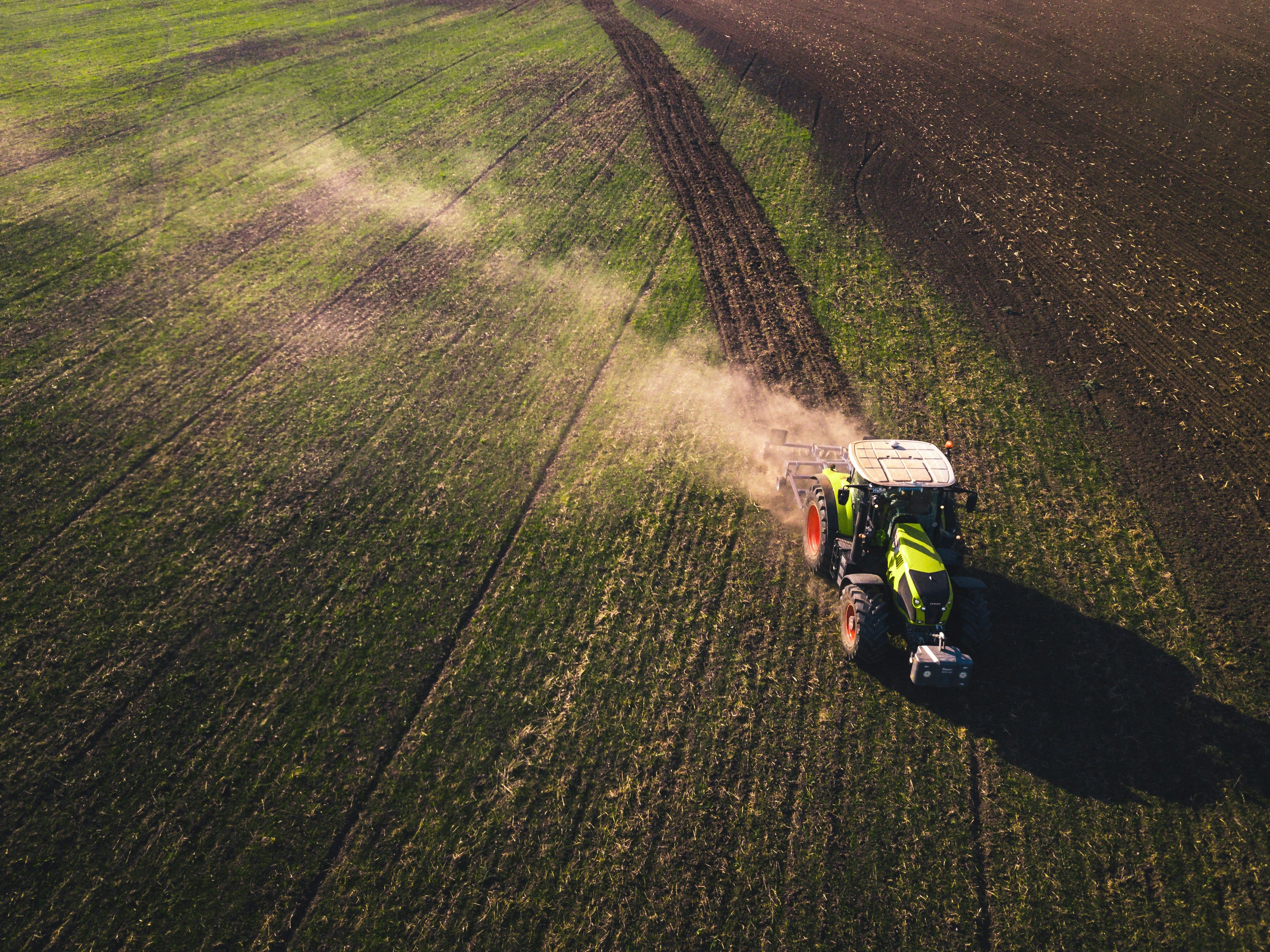
The room’s most original argument, and the one this essay is built around, concerned how the European food system will actually be forced to change. The answer was not regulation. It was insurance.
The reasoning is that insurance is binary in a way regulation is not. Regulation is negotiated, phased, delayed, and softened; a compliance cost can be absorbed, lobbied down, or deferred. Insurance is different. No serious farm, processor, or food business operates without it. And when an insurer decides a risk is no longer acceptable, or reprices it sharply, the effect is immediate and commercial. There is no phase-in and no consultation period. The cover is there or it is not, and if it is not, the operation stops, because you cannot run a regulated food business, or borrow against it, without insurance.
This makes the insurance industry a faster and blunter forcing mechanism than any regulator. As climate volatility raises the risk attached to certain farming practices, certain crops, and certain geographies, insurers reprice or withdraw. The moment coverage for a degraded or high-risk operation becomes unaffordable or unavailable, the economics of that operation collapse, regardless of what the regulation says. An insurer does not need a parliamentary majority, a transition period, or a consultation with stakeholders. It needs an actuary to change a number.
And the numbers are already changing. Agroseguro, the pool that insures Spanish farming, paid out €1.24 billion in 2023, a 56% rise on the year before and the worst year since the system was founded in 1978, with the drought alone producing the largest claim in its history. Agroseguro’s own analysis notes that droughts which used to return every seven to ten years, 1995, 2005, 2012, now arrive back to back: 2017, 2019, 2022, 2023. In 2025 the system paid out €804 million, the second highest in a decade, and the rating agency Morningstar DBRS expects claims to rise again in 2026. That is what a risk table being rewritten looks like, and it lands on a system with little slack. A study commissioned by the European Commission and the EIB put EU agricultural losses at €28.3 billion a year, with only 20 to 30% insured and farmers carrying the rest themselves. When cover reprices, the farmer’s choice is a higher premium, a thinner policy, or none.
The room’s insight was that anyone trying to understand where the food system will be forced to change first should watch the insurers, not the legislators. Insurance turns a slow-moving environmental risk into an immediate commercial one, and that is what actually moves operators.
If that is right, then the question that matters is: what will the insurers price? The answer is the seven cracks below. Read them the way an underwriter would. Each one is not just a vulnerability. It is a claim event waiting to be priced, a premium waiting to rise, or a class of cover waiting to be withdrawn.
What the insurers will price: seven cracks
The room laid out, without drama, the specific dependencies that make European food fragile. Start with the one that has already been tested, because it shows exactly how the mechanism works.
Disease. On 26 November 2025, two wild boar were found dead in Bellaterra, on the edge of Barcelona. Testing confirmed African swine fever, the first cases in Spain since 1994.
The suspected origin was mundane to the point of absurdity: a discarded meat sandwich, dropped near a motorway rest area, eaten by a boar. That explanation was later challenged. In December the Agriculture Ministry noted the strain resembled a lineage widely used in laboratories, opened an investigation into a possible leak from a nearby research centre, and police searched the facility. In February 2026 the Ministry’s report ruled the laboratory out on genetic sequencing and pointed investigators back toward contaminated food entering the country. Eight months on, the cause is still argued over.
The commercial damage never waited for the answer. Within days the case count rose past a dozen, the Spanish army was deployed, and a €8.8 billion export industry was in trouble because of an animal that had eaten someone’s lunch. Spain is the EU’s largest pork producer, roughly a quarter of all European output. Of its 400 export certificates covering 104 countries, about a third were blocked within a week. China, Japan and Mexico suspended imports. Live pig prices fell 16% in a single week, piglet prices 28%.
No farm was infected. Not one, then or since. Every positive case has stayed inside the containment zone, in wild boar. And the trade machinery is still grinding back eight months later: China kept buying by applying regionalisation to the province of Barcelona, while Spain reopens the rest market by market, certificate by certificate, the Philippines in May 2026, Honduras and Ecuador in June.
The biology was contained in weeks. The commercial system it triggered is taking the better part of a year to unwind. That is a loss event whose financial consequences ran ahead of its physical ones, and it is exactly the profile that reprices a market.
The other six cracks have not been tested like that yet. They are the same shape.
Animal feed. Europe imports the overwhelming majority of the soy that feeds its livestock, on the order of 97% of its soybean-meal protein. The EU Deforestation Regulation, enforced from the end of 2026, adds cost and complexity to that supply at the point of maximum dependence.
Micro-ingredients. Europe depends on China for roughly 70% of the vitamins and a similar or higher share of the amino acids that go into animal feed and processed food. For some individual vitamins, China’s share of world production runs well above 90%. These are not substitutable overnight, and the dependency sits at a chokepoint few consumers have ever heard of.
Fertiliser. Europe produces only a fraction of its own nitrogen fertiliser needs and leaned heavily on Russia and Belarus for imports, a dependency uncomfortable enough that the EU introduced escalating tariffs in 2025 to force a shift, at the cost of higher input prices in the meantime.
The cold chain. The refrigeration and processing equipment European food relies on depends on rare-earth elements and components processed overwhelmingly in China, which controls roughly 90% of global rare-earth refining, and which demonstrated during 2025 how readily that dominance becomes an export-control lever.
Energy. Food production is energy-intensive across fertiliser, processing, refrigeration and transport. The energy-price shock fed directly into food inflation, which across the euro area peaked near 15% in 2023.
War. Ukraine, one of the world’s great grain baskets, has seen wheat and other staple crop areas fall by roughly a third against 2021, removing a source of stability from European and global grain supply.
Now sort them the way an underwriter would, because the sorting is where the essay’s argument actually bites.
Three of these are already inside the policy schedule. Disease, extreme weather and energy volatility are priced, claimed against, and repriced every renewal cycle. This is where movement happens first, and where it has already started.
Two are priced indirectly, through business interruption and contingent supply-chain cover. Feed and fertiliser dependency do not appear on a policy as risks in their own right, but when they fail, the claim lands anyway. This is the layer where exclusions get quietly written, because insurers can see the correlation before they can price it.
Two are barely insurable at all. Micro-ingredient concentration and rare-earth dependency are political risks wearing industrial clothes. No actuarial table prices an export-control decision made in Beijing. The exposure does not transfer. It sits on the operator’s balance sheet permanently, which means the only available hedge is structural: another source, another supplier, or another input.
That is the map. Three cracks the insurers will price and are already pricing, two they will price at one remove, two they cannot price and will simply decline to carry. No single one is necessarily catastrophic alone. The room’s point was that they are correlated, they are simultaneous, and several are being tested in real time. Regulators respond to that with consultations and phase-ins measured in years. Insurers respond with premiums and exclusions measured in renewal cycles.
Consumers do not pay for sustainability
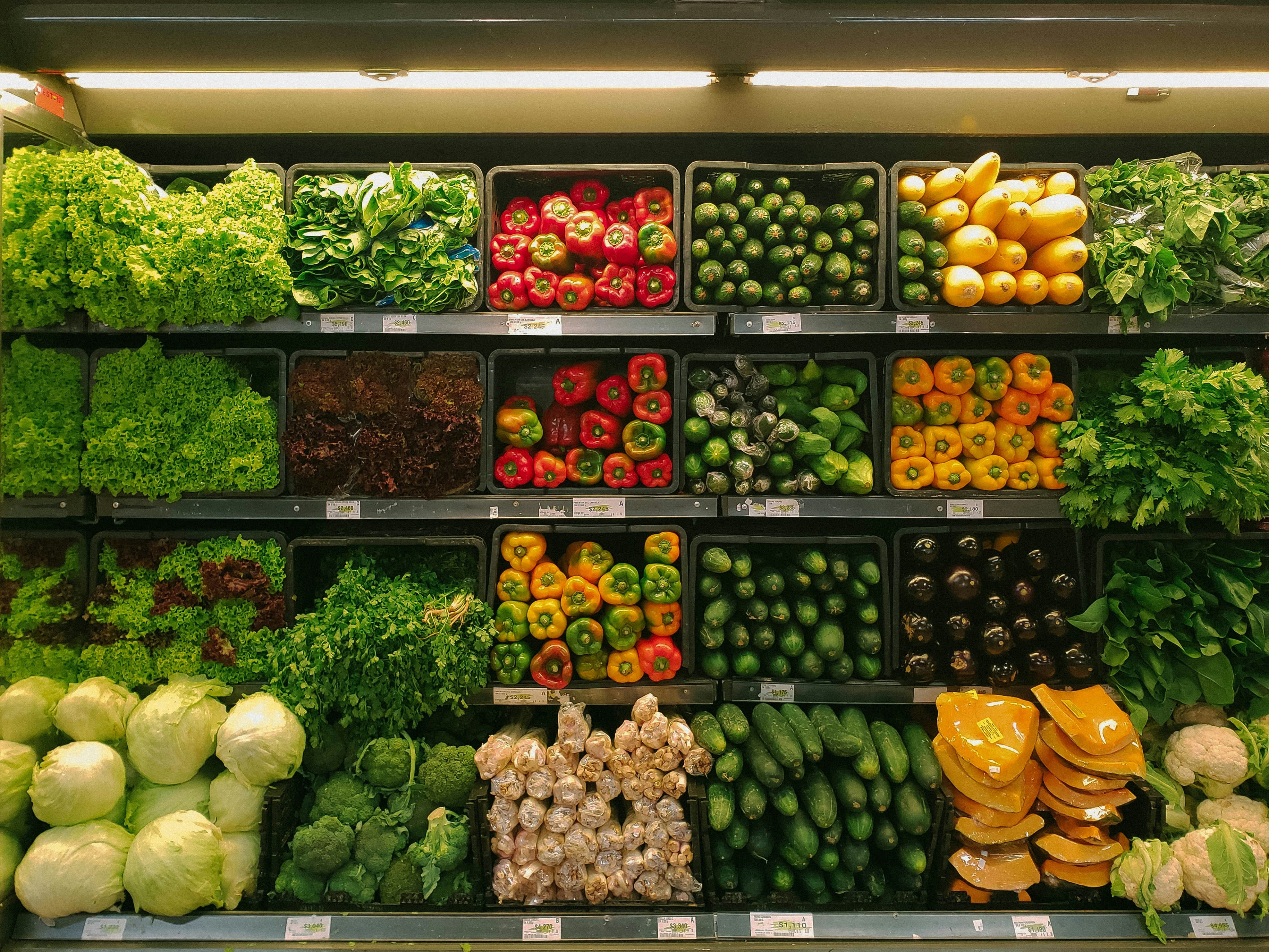
The third finding was a hard commercial truth that the room, several of whose members build and back sustainable food companies, stated plainly. Consumers say they want sustainability. Their purchasing behaviour says otherwise.
This is one of the most consistent findings in consumer research: a large majority express a preference for sustainable products, and a far smaller number actually pay a premium for them when they reach the shelf, especially under cost-of-living pressure. The stated preference is real, but it does not survive contact with the price tag for most shoppers most of the time.
The commercial implication is decisive for anyone building in this space. A product that leads with its sustainability credentials, and asks the consumer to pay more for them, is building on the weakest part of the consumer’s actual behaviour. The products that win lead with something the consumer will reliably pay for, price, protein, taste, convenience, and treat the sustainability as a built-in benefit rather than the headline ask. This is the same lesson that recurred across the food and materials rooms at Edition I: the sustainable proposition has to be delivered as a better or cheaper version of what the consumer already buys, not as a premium they are asked to pay for their conscience. Lead with protein and price. Let the sustainability ride along.
The position
The implication, for any investor, founder, or policymaker in European food, is that the fastest-moving force in the system is not the one everyone is watching. Brussels will consult, phase, and negotiate. The insurers will simply reprice. When cover for a high-risk crop, a degraded soil, or an exposed geography becomes unaffordable or unavailable, the operating model attached to it ends, whatever the regulation says. The system’s real transition timetable is being written in renewal cycles, not legislative calendars.
The rest follows from that. The seven dependencies are real, correlated, and already being tested, and they are exactly what underwriters price. The consumer will not pay a premium for sustainability, so the winning products have to lead with price and protein.
The alternative is to act on the system as it actually behaves. Watch the insurers for the earliest signal of where change will be forced. Treat the seven dependencies as current risks to be hedged now, not future risks to be studied. Build products that lead with what consumers actually buy.
The room was not unanimous on every point. There were disagreements on which dependencies are most urgent, and on how quickly the insurance mechanism will bite. There was no disagreement on the core diagnosis. Europe’s food system has multiple cracks, several are already showing, and the institution most likely to force the response is the one nobody is lobbying.
The next gathering is Edition II, on 11th of May 2027 in Zürich, and the meetup series opens this question long before then. The work between now and then is not the event. It is the architecture being built around it.
If your work intersects with what the room described, the door is open.
Ways in.
Join the meetup series. Launching this fall: focused gatherings on each of our key clusters, food-system resilience among them, ahead of Edition II. If you are addressing one of the seven cracks in your business or portfolio, reach out to Camille at camille@thedecisionroom.net and follow the calendar so you catch the food room when it lands. → Subscribe to our calendar
Apply for Edition II. This essay is one of eight from Edition I. Edition II is where the diagnosis becomes work. Founding access is open now, at the lowest rate we’ll offer. The full event is capped at 400. Each roundtable is capped at 20. → Apply for founding access
Partner the room. Partners shape the question. The room owns the answer. Co-host a roundtable, run the workshop that follows, or anchor a cluster across editions. → Explore partnership
Reply to this email if any of the workstreams above are yours. We will be in touch directly.
Aaron C. Leaman
Co-founder, The Decision Room aaron@thedecisionroom.net
The Decision Room is an invite-led climate and frontier-tech capital convening. Once a year. Zürich. This essay is the third in the series, one per closed-door conversation from Edition I. The full record is Before Capital Flows, essay written by Aaron C. Leaman.