Welcome back to Changemakers, the newsletter for founders, storytellers and leaders shaping the future of climate, nature and impact-led innovation.
In this edition, we’re diving deep into why stories truly matter. We’ll show you how to build a story that both illustrates the science and embodies it, guiding every part of your reader’s mind through a rich, multi-sensory experience, and we go deep, so let’s get to it!
Today’s Topics:
→ Spotlight: The Night a TEDx Talk Nearly Failed, Then Turned Into Magic
→ The Science of Simulation: Why Stories Engage More Than Facts
→ The Three Pillars of Neuro-Driven Storytelling (& Exercise To Get You Started)
→ Practical Takeaways: How to Move Audiences from Thinking to Feeling
→ Implications and Next Steps: Applying This in Your Field
Note from Aaron C. Leaman (Founder of Brighter Future & Strategic Communications Advisor): As an operator, strategist and storyteller, my mission is to innovate continually and solve your most pressing brand & communication challenges. Recently, I have been exploring how neuroscience can inform narrative. Although I am not a neuroscientist, I am fascinated by how understanding basic brain functions can elevate storytelling. This article represents that exploration, and I hope you find it valuable.
Spotlight: The Night a TEDx Talk Nearly Failed, Then Turned Into Magic
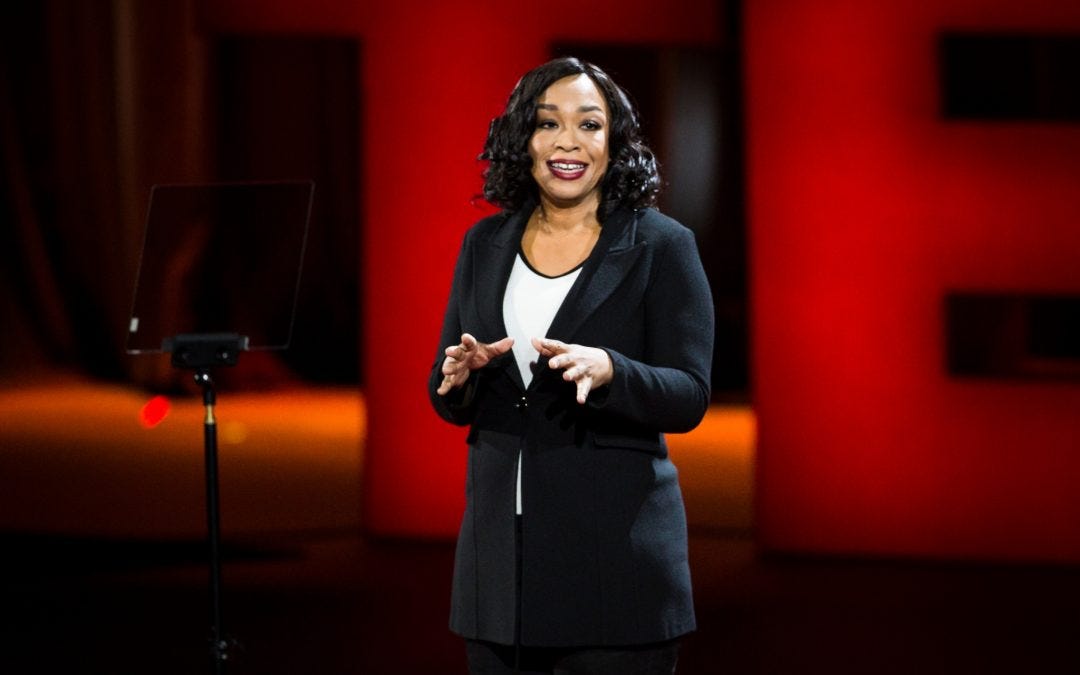
It was 7 pm, the auditorium lights dimmed, and the speaker stepped behind the podium for her TEDx debut rehearsal. She launched straight into data, charts, numbers, bullet points, confident her polished slides and rehearsed script would seal the deal. But by the fourth minute, the crowd felt polite yet lukewarm. Faces remained neutral.
She wrapped up, and the applause was brief and obligatory. She had failed to connect. As she left the stage, a mentor quietly approached her. “You have another slot tomorrow if you’re willing to try something different. Leave the data for later. Just tell them a story they can feel.”
That night, she barely slept. At dawn, she returned to the same auditorium, this time determined to prime every part of the audience’s brain.
She began with a simple sensory scene:
“Picture a midnight forest, dewdrops glinting on spider webs, the faint tang of pine resin on your tongue, a distant owl hooting as wind stirs dead leaves.”
Instantly, a collective hush fell. The murmur of restless chairs stilled. Faces softened, nostalgia and curiosity flickered in every eye.
She paused, letting the silence linger, then added:
“Now imagine each breath you take carries a hint of memory, wildflowers from a childhood garden, the smoky aroma of a campfire, the crisp scent of sea air, and that each of those tiny particles holds a story waiting to be revealed.”
As she spoke, the olfactory cortex was primed by imagined scent, the gustatory cortex by that hint of pine, the auditory cortex by the owl’s hoot, and the limbic system by the emotional tug of a midnight forest. Broca’s and Wernicke’s areas stitched the details into meaning, while the motor cortex stirred as attendees subconsciously imagined leaning forward.
After a beat, she wove in just enough context for her conservation initiative to resonate:
“It is the hidden web of life on the forest floor, leaf litter, soil microbes, root networks, that filters our water, enriches the soil, and shelters countless species. This is why we fight to preserve forgotten woodlands.”
From that moment, the talk transcended information. It became a shared experience in which every fibre of the audience’s brain was engaged. By the final word, questions weren’t merely polite, they were urgent. People rose to their feet, eager to learn more. Seminar seats emptied as volunteers lined up at the exit.
That second performance proved one key lesson, when a story activates multiple brain networks at once, through sound, imagery, and memory, it compels action.
Notice the leap from data to sensory immersion: by describing smell, sound, and memory in the opening lines, she recruited multiple brain networks setting the stage for genuine engagement.
The Science of Simulation: Why Stories Engage More Than Facts
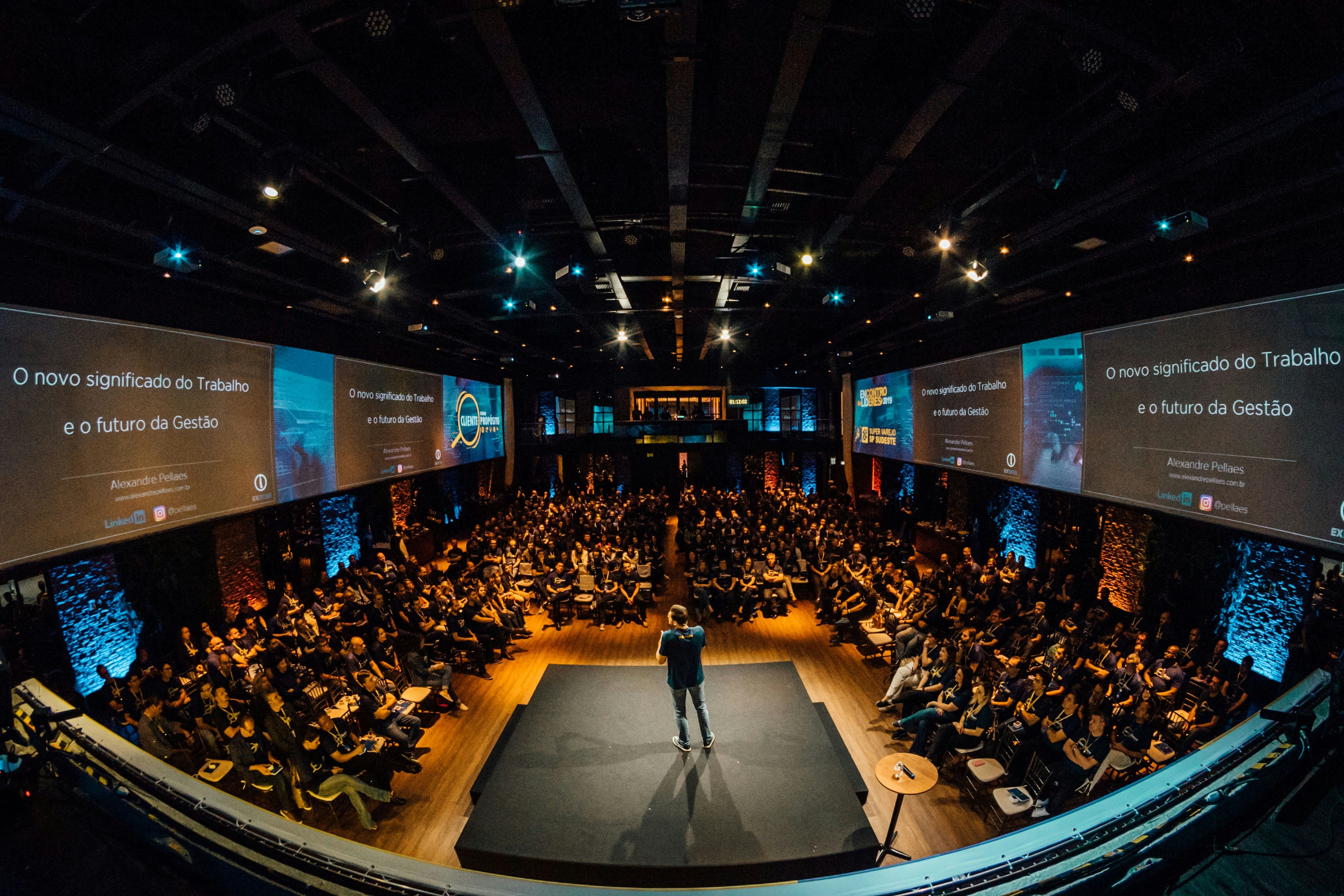
Many presentations and speeches start in the “thinking” part of the brain: logic, facts, bullet points. That engages prefrontal regions and your audience’s rational mind, but it has limited power to inspire immediate action.
Vivid narratives co-opt not only language centres but also sensory cortices and emotional hubs, creating an embodied simulation of “living” the story rather than merely reading or hearing it. According to research:
Olfactory cortex fires when readers imagine scents, even without actual odours present
Motor cortex engages when action verbs prompt us to simulate movement
Auditory cortex resonates at the thought of creaking floorboards or distant thunder
Gustatory cortex lights up at descriptions of taste, salty air or bitter herbs
Limbic system (amygdala, hippocampus) heightens emotional resonance: fear, wonder or empathy
Language areas (Broca’s and Wernicke’s) knit these fragments into coherent meaning
From Co-Activation to Compelled Behaviour
Here is my central proposition: the more completely a narrative recruits these brain networks, the more swiftly and strongly it compels real-world action. By synchronising language processing with sensory imagery and emotional valence, a story:
Deepens Immersion
Multisensory detail engages multiple cortical maps at once. That redundancy reinforces memory and makes the tale feel “real”.Heightens Emotional Stakes
When the amygdala and hippocampus light up, we don’t merely understand a threat, we feel urgency, empathy or moral obligation.Primes Motor Readiness
Motor imagery readies us to act, even if only mentally at first. This readiness lowers the threshold for actual deeds.Focuses Cognitive Resources
Short, sensory-rich sentences keep Broca’s area busy and prevent mental drift, maintaining attention on the story’s call to action.
If you can hit at least three of the sensory/emotional triggers within the first 30 seconds of engagement you move people out of “head-only” mode and into embodied immersion.
The Three Pillars of Neuro-Driven Storytelling

Pillar One: Neuro-Cognitive Mapping - Which Brain Areas to Co-Activate
Before a single word is written, it is essential to identify which neural regions must be engaged and why. For example, is the goal to generate a sense of urgency? To enable imagination of stepping into a scene? To evoke a lingering sound? Each objective corresponds to a specific part of the brain. By pinpointing targets in advance, sensory cues and emotional hooks can be selected with precision, instead of relying on arbitrary colours or aromas that may fail to make an impact.
1.1 Defining the Targets
The key brain areas associated with each story element:
Smell – Olfactory cortex (piriform cortex)
Movement – Motor cortex (precentral gyrus)
Sound – Auditory cortex (Heschl’s gyrus)
Taste – Gustatory cortex (insula, frontal operculum)
Emotion – Limbic system (amygdala, hippocampus)
Language – Broca’s and Wernicke’s areas (inferior frontal, superior temporal gyri)
1.2 Evidence for Cross-Modal Activation
Key research supports this mapping approach:
Olfactory Activation: Functional MRI studies demonstrate that reading vivid passages describing scent activates primary olfactory regions, even though no actual odour is present (e.g. González et al., 2006; Bensafi et al., 2007).
Motor Imagery: EEG experiments confirm that encountering action verbs (such as “run,” “grasp” or “kick”) triggers mu‐rhythm desynchronisation, a reliable marker of motor cortex engagement (e.g. Hauk et al., 2004; Pulvermüller & Fadiga, 2010).
1.3 The “Story‐to‐Brain” Matrix
This matrix links specific narrative devices to their corresponding cortical activation:
Sensory hook (smell): Example: “earthy scent of damp soil” → Activates Olfactory cortex
Kinetic cue (movement): Example: “twigs crackle underfoot” → Activates Motor cortex
Sound detail: – Example: “blackbird’s morning trill” → Activates Auditory cortex
Taste hint: Example: “tang of dew on your tongue” → Activates Gustatory cortex
Emotional context: Example phrase: “heart pounding with wonder” → Activates Limbic system
Language rhythm: – Example phrase: “Short sentences hit like drumbeats” → Activates Broca’s and Wernicke’s areas
Pillar Two: Storycraft Framework - Writing Tactics That Engage Senses and Emotions
Why focus on specific writing tactics?
Now that you know which brain regions to target, it is time to craft your actual narrative. In every sentence, you can choose words that prime smell, taste, sound and movement, then layer in emotional cues that tug at the limbic system. Below are four sub‐pillars outlining how to make each word count.
2.1 Sensory Hooks
Use precise nouns. Instead of “flower scent,” write “jasmine perfume.” Neuroimaging shows that specific labels trigger stronger olfactory activation than vague descriptors.
Weave in details sparingly. Too many sensory words at once can overwhelm. Offer one or two vivid cues per paragraph so each “hit” is distinct and memorable.
2.2 Emotional Ramp
Begin with curiosity, escalate through suspense, then provide a resolution or clear call to action.
Example: “Just as the UV light revealed our first glowing DNA threads, I realised that every breath is a message waiting to be read.” This juxtaposes wonder (discovery) with purpose (message), engaging the limbic system.
2.3 Kinetic Cues
Employ active verbs: “shatter,” “pulse,” “cascade.” These words prime the motor cortex by simulating movement.
Insert micro‐pauses (line breaks, short sentences) to let the motor cortex replay each action.
“Roots twisted beneath her boots. She felt a jolt, an echo in her gut, before stepping forward.”
2.4 Language Precision
Position high‐impact sensory or emotional words in short, punchy sentences. This keeps Broca’s and Wernicke’s areas engaged and prevents mental drift.
Vary sentence length strategically. A one‐word sentence can feel like a drumbeat to the brain, jolting attention back to the narrative.
Exercise: Let us Create an Immersive Introduction to Hook All the Senses

An immersive, emotive opening can set the stage, build a personal connection or illustrate a real‐world problem that your audience immediately feels. The goal is to prime multiple brain regions so that readers or listeners move out of purely logical, “head‐only” processing and into a fully embodied experience. Below are three approaches, select the one that best fits your story. Each example is roughly 50–75 words and demonstrates how to recruit olfactory, auditory, motor, gustatory, limbic and language regions simultaneously.
Option 1: Set the Scene and Lead a Journey
Begin by asking the audience to close their eyes and imagine themselves in a vivid place. Guide them on a sensory journey that makes them feel present in that environment. This approach takes control of attention and immerses them immediately.
Close your eyes and inhale the salty tang of sea spray. Imagine waves lapping at jagged cliffs, each curl of white foam releasing a waft of iodine and damp kelp. Feel your feet press into smooth, wet rock as the gulls cry overhead. Taste the ocean’s cool breath on your lips. By the time you open your eyes, you are standing on that windswept shore.
Option 2: Build Emotional Connection to Ourselves
Use a brief origin snapshot to share why the speaker or company exists. This personal, emotive backstory taps empathy and makes the audience care about your mission or vision from the first sentence.
Before dawn, I stood in the back of that makeshift clinic stitching together scraps of linen to wrap injured hands. The room smelled of antiseptic and sweat. Every echo of children’s coughs reminded me why I had traded my university lab for rural fields. My fingers trembled as I watched a mother cradle her feverish child. That moment set my purpose to bring healthcare solutions to the world’s most remote corners.
Option 3: Show Understanding of Customer Problems
Begin with a real customer’s day‐to‐day challenge and how they discovered a solution. This “day in the life” approach demonstrates empathy and shows that you understand their needs before introducing your product or service.
Before sunrise, Ana sprinted through her orchard, boots sinking in mud and breath forming clouds in the cool air. Her heart pounded as she checked the soil moisture sensor, only to see dry lights blinking red. Bees buzzed sluggishly among wilting blossoms. The harvest was at risk until she remembered the new irrigation system installed last week. One tap on the control pad and green indicators glowed, water flowed and relief washed over her.
Each of these approaches can be adapted to your context: whether you need to set the scene, build an emotional connection to your own story or demonstrate empathy with a customer’s daily challenge. By weaving in sensory detail, implied movement and emotional hooks, you prime the audience’s brain to move from logic into immersion.
Pillar Three: Behavioural Outcome Testing - Measuring Impact
Why measure?
Even the most sensory‐rich story can fall flat if you do not track its effect. Once you have drafted a sensory‐driven narrative, you need a plan to measure how well it actually fires up those brain networks and whether that translates into clicks, sign‐ups or sign‐offs.
3.1 Experimental Design
A/B test: Version A is purely informational (facts, statistics, bullet points); Version B is sensory‐rich and emotional.
Measure neural markers (if you have access to EEG or eye‐tracking) and behavioural responses (clicks, sign‐ups, donations, time on page).
3.2 Quantitative Metrics
Conversion rate: Percentage of readers or attendees who take the next step (click, subscribe, volunteer).
Dwell time: Average time spent on the article or slide deck.
Self‐report scales: Immersion, vividness, emotional valence rated on a 1–7 scale.
3.3 Qualitative Feedback
Ask participants to describe one vivid image they recall after reading or listening.
Collect anecdotal notes on which sensory detail moved them most, and why
Practical Takeaways: How to Move Audiences from Thinking to Feeling

You’re Not Literally “Lighting Up” Every Neuron: But you are engaging multiple brain regions simultaneously, weaving them into a cohesive experience.
Emphasise the Shift: Make it explicit in your writing or speaking: “I want you to feel this…then here’s why it matters.” Acknowledge: “We’re moving from thinking about data to feeling this moment.”
Strategic Layering: Even if you can’t activate all six networks in every sentence, aim to combine at least two or three (e.g., smell + emotion, movement + sound, language + motor). Over the course of the talk or article, ensure every network is called upon at least once.
Call to Action as a Continuation of Feeling: When you finally ask, “Will you join us?” or “Sign up now,” you’re not jumping back into logic, you’re extending the emotional / sensory state you’ve already created.
Implications and Next Steps: Applying This in Your Field
Marketing and Fundraising
Craft campaigns that transport donors into a lived experience of impact.Internal Communications
Share strategy updates as vivid scenarios rather than bullet-point lists.Public Health
Frame safety guidance within human stories of survival and triumph.Education
Teach complex concepts through narrative simulations that students can “feel” and “do.”
If our aim is to move people, to spur them into immediate, meaningful action, then we must speak to every corner of their brain. Stories that ignite olfaction, motion, taste, hearing, emotion, and language all at once become the fastest-acting catalysts of change.
Explore Our Services
Whether you’re just starting or striving for new heights, these services are built to deliver results.
Communications Consulting: High-trust, high-impact strategic communications to sharpen your voice and align your message across channels.
Investor & Partnership: Success Fee Only Pitch-ready support that helps you earn belief from day one.
Brand and Identity Design: Strategic and visual foundations to help you show up with confidence and coherence across every touchpoint; from logos to brand systems, we build the assets and structure to scale.
High-Level Design Support: Need reports, investor updates, or partner materials? We offer tailored design execution across your business-critical communications.
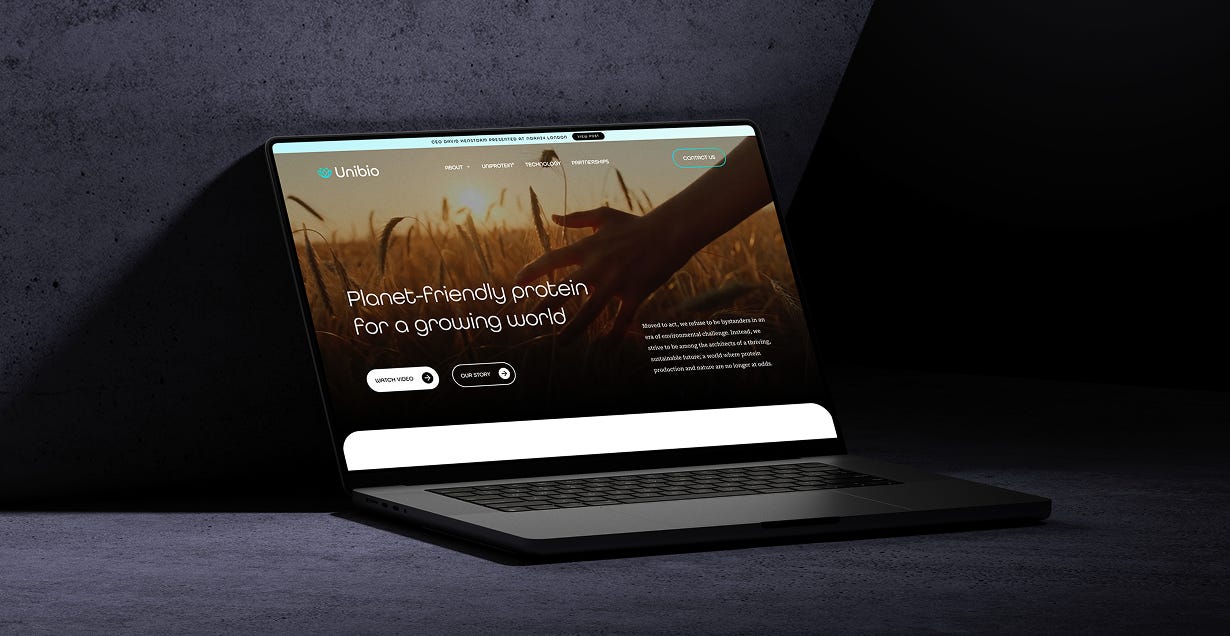
Website Design: Tailored Webflow builds that communicate your credibility and value.

Know Someone Who Needs Support Brand or Communications Support?
Refer a founder to Brighter Future Studio and earn a 10% commission on their first project. Let’s help more purpose-led teams win with story. If this story resonated, or if you’re preparing for a high-stakes moment of your own; we’d love to help.
Thanks for reading.
If you’ve made it this far, feel free to share this with a founder, partner, or investor navigating these challenges. Or reach out directly to talk.
Best,
Aaron C. Leaman
Founder, Brighter Future